
 Edited by Samuel Mountjoy
Do You Need Good Credit to Get a Rewards Credit Card?
Edited by Samuel Mountjoy
Quick Answer
- To get a rewards card, you’ll generally need good or excellent credit scores, which corresponds to a FICO Score of 670 or higher.
- The higher your score, the more likely it is you’ll qualify for a card that offers premium rewards.

In general, you need good to excellent credit scores to get a rewards credit card with the most valuable perks. These can include cash back of up to 8% on certain purchases, generous intro bonuses, travel upgrades and purchase protection—though you may have to pay an annual fee for the privilege of accessing these rewards.
While the best rewards cards are reserved for those with good or excellent credit, more limited rewards are available on cards for bad and fair credit, too. For example, several secured credit cards come with cash back on eligible purchases.
Here's what to know about rewards cards' requirements for credit scores.
You Need Good to Excellent Credit to Get a Rewards Card
Premium rewards credit cards come with major benefits, and to use them, you'll need good or excellent credit, which corresponds to a FICO® ScoreΘ of 670 or higher. The closer your FICO® Score is to 850, the more likely it is you'll be eligible for the cards with the most valuable perks.
Credit card companies want your business if you have good or excellent credit, since they anticipate you won't miss payments and default on the account. Rewards are a way they can entice you to sign up for a particular card, and to use that card for many of your purchases.
If you have fair or poor credit scores, you're considered a greater risk to lenders, and issuers in turn may not be as interested in securing you as a rewards card customer. An exception is cash back secured credit cards, which are available to those who are building or rebuilding credit.
To better understand your credit scores, check with your bank and current credit card issuers to see if they offer free credit monitoring. Many websites also offer free credit scores if you register for an account, including Experian, which provides your free FICO® Score.
Best rewards cards of 2026
Compare cards from our partners that earn points, cash back or miles on everyday spending.
Offers from our partners
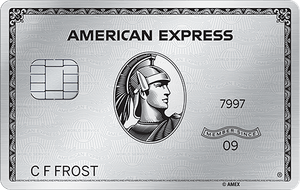
American Express Platinum Card®
Intro bonus:
As High As 175,000 points. Find Out Your Offer.
You may be eligible for as high as 175,000 Membership Rewards® Points after spending $12,000 in eligible purchases on your new Card in your first 6 months of Membership. Welcome offers vary and you may not be eligible for an offer.
Ongoing APR:See Pay Over Time APR
Rewards:
1x - 5x (Points per dollar)
Get more for your travels with 5X Membership Rewards® points on all flights and prepaid hotel bookings through American Express Travel®, including Fine Hotels + Resorts® and The Hotel Collection bookings. You earn 5X points on flights purchased directly from airlines or through American Express Travel® on up to $500,000 on these purchases per calendar year.
Annual Fee:$895
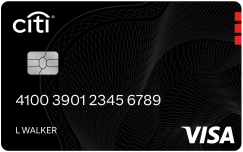
Costco Anywhere Visa® Card by Citi
Ongoing APR:18.99% - 26.99% (Variable)
Rewards:
1% - 5% (cash back)
Earn 5% cash back rewards on gas at Costco and earn 4% cash back on other eligible gas and electric vehicle (EV) charging purchases for the first $7,000 combined spend per year, and then 1% thereafter. 3% cash back on restaurants and eligible travel purchases and eligible travel, including Costco Travel. 2% cash back on all other purchases from Costco and Costco.com. 1% cash back on all other purchases.
Annual Fee:$0
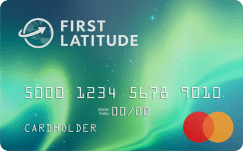
First Latitude Secured Mastercard® Cash Back Rewards
Ongoing APR:27.74% Variable
Rewards:
1% - 10% (cash back)
Earn up to 10% Cash Back on purchases at participating merchants that fit your lifestyle—from dining and grocery to retail and more—plus 1% Cash Back on payments made to your First Latitude Card.^^
Annual Fee:$0

Citi® / AAdvantage® Globe™ Mastercard®
Ongoing APR:19.74% - 29.74% (Variable)
Rewards:
1x - 6x (Miles per dollar)
Earn 6 AAdvantage® miles for every $1 spent on eligible hotels booked through aadvantagehotels.com. Earn 3 AAdvantage® miles for every $1 spent on eligible American Airlines purchases. Earn 2 AAdvantage® miles for every $1 spent at restaurants, including takeout and delivery. Earn 1 AAdvantage® miles for every $1 spent on all other purchases.
Annual Fee:$350

Credit One Bank® Wander® American Express® Metal Card
Ongoing APR:29.74% Variable
Rewards:
1% - 10% (cash back)
Earn 5% cash back rewards on eligible dining, gas, & travel purchases, 1% cash back rewards on all other purchases, and 10% cash back rewards on eligible hotel and car rentals booked using the Credit One Bank travel partner. Cash back rewards will be awarded as rewards points redeemable for a statement credit, gift cards, travel, and more. Terms apply.
Annual Fee:$95
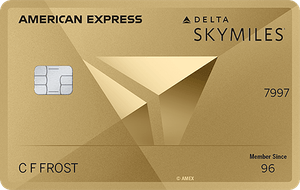
Delta SkyMiles® Gold American Express Card
Intro bonus:
As High As 80K Miles + $250 Statement Credit
You may be eligible for as high as 80,000 Bonus Miles and a $250 Statement Credit after you spend $3,000 in eligible purchases on your new Card in your first 6 months of Card Membership. Apply to find out your offer. Terms Apply. Offer ends 11/04/2026.
Ongoing APR:19.74%-28.74% Variable
Rewards:
1x - 2x (Miles per dollar)
When you use your Delta SkyMiles® Gold American Express Card, you can earn: 2X miles on Delta Purchases, 2X miles at restaurants, 2X miles at U.S. supermarkets, 1X miles on all other eligible purchases. Every mile you earn brings you closer to the places you want to go. Turn them into your next trip, use them for seat upgrades, and more.
Annual Fee:$0 introductory annual fee for the first year, then $150.
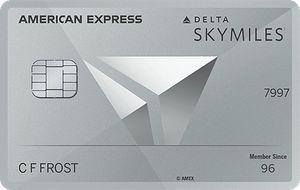
Delta SkyMiles® Platinum American Express Card
Intro bonus:
As High As 90K Miles + $300 Statement Credit
You may be eligible for as high as 90,000 Bonus Miles and a $300 Statement Credit after you spend $4,000 in eligible purchases on your new Card in your first 6 months of Card Membership. Apply to find out your offer. Terms Apply. Offer ends 11/04/2026.
Ongoing APR:19.74%-28.74% Variable
Rewards:
1x - 3x (Miles per dollar)
Earn 3X Miles on Delta purchases and purchases made directly with hotels. Earn 2X Miles at restaurants worldwide including takeout and delivery in the U.S., and at U.S. supermarkets. Earn 1X Miles on all other eligible purchases.
Annual Fee:$350
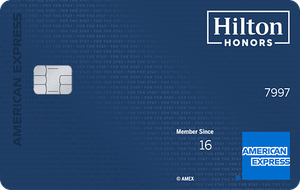
Hilton Honors American Express Surpass® Card
Intro bonus:
130,000 Points
Earn 130,000 Bonus Points plus a Free Night Reward after you spend $3,000 in purchases on the Hilton Honors American Express Surpass® Card in the first 6 months of Card Membership. Offer ends 01/13/2027.
Ongoing APR:19.74%-28.74% Variable
Rewards:
3x - 12x (Points per dollar)
Earn 12X Hilton Honors Bonus Points for each dollar of eligible purchases charged on your Card directly with a hotel or resort within the Hilton portfolio. Earn 6X Hilton Honors Bonus Points for each dollar of eligible purchases on your Card at U.S. restaurants, at U.S. supermarkets, and at U.S. gas stations. Earn 4X Hilton Honors Bonus Points for each dollar of U.S. Online Retail purchases. Earn 3X Hilton Honors Bonus Points for all other eligible purchases on your Card.
Annual Fee:$150
See all our best rewards credit cards for 2026.
Benefits of Rewards Cards
Rewards credit cards come with a host of impressive benefits, which can vary depending on the card. They may include:
- Cash back: A cash back credit card returns to you a certain percentage of your spending as a credit towards your balance or via direct deposit to your bank account, among other redemption options. They are some of the most straightforward rewards cards, since they don't involve collecting and transferring points or miles—and they often come with no annual fees. Depending on the card, you can earn cash back at a flat rate, in different amounts based on spending category or at a higher rate in bonus categories that rotate each quarter.
- Points or miles: Travel credit cards, as well as hotel and airline co-branded cards, let you earn rewards on eligible purchases in the form of points or miles. You can then redeem these for free flights, hotel stays and even cash back, gift cards and online merchandise. You may also be able to transfer points or miles to airline or hotel loyalty programs to broaden your rewards' reach.
- Intro bonuses: Rewards cards often come with an introductory bonus if you spend a minimum amount within the first few months of card ownership. Points cards in particular can provide bonuses worth up to as much as $1,000 in travel.
- Travel and lifestyle perks: Co-branded cards that let you earn miles on a certain airline, for example, can get you benefits like seat upgrades and free checked bags. Hotel cards may offer room upgrades or free breakfast at the connected hotel chain.
- Purchase protection: Rewards cards typically offer additional consumer protections that apply to purchases made with the card. You may get extended warranties or return protection, for example, which lets you return an item for a refund even if the store where you bought it won't accept it.
- Insurance: Your card may also provide trip cancellation and interruption insurance, primary or secondary rental car insurance or roadside assistance. To get coverage, you generally need to book your trip with the rewards card or with points or miles from the card's rewards program.
How to Find the Right Rewards Card
It's key to compare multiple rewards cards to find the one that best suits your needs. When making a decision, consider your:
- Spending habits: If you mostly spend on everyday items like gas and groceries, a cash back credit card with a high cash-back rate on these categories may be best. On the other hand, if you travel a lot and plan to put nearly all of your purchases on the card—and, ideally, pay it off each month—you could stand to earn a significant amount in points or miles for travel. You could also consider a co-branded rewards card if you're loyal to a specific airline or hotel chain.
- Ideal reward type: Some cardholders want the easiest rewards approach possible, with a straightforward way to earn rewards and simple redemption in the form of money back each month. In this case, a cash back credit card will do the trick. If you like the idea of collecting points or miles and finding ways to maximize their redemption value, a travel card may be for you. You may also consider diversifying your cards and opting for a few rewards cards with different types of perks.
- Budget for an annual fee: To get access to the most premium travel rewards, you'll likely have to pay an annual fee. Before moving forward, make sure you'll earn enough rewards to justify the card's fee, which could be $100 or more per year for a points card, for example. If you want to avoid a fee, consider a cash back credit card instead.
How to Improve Your Credit Scores Before Applying
The perks of rewards cards could incentivize you to increase your credit scores to get one. But there are lots of additional reasons to aim for good credit, including lower interest rates on loans and a potentially easier time qualifying for new credit. To improve your credit scores, try these strategies:
- Put bills on autopay. Since payment history is the most important factor in your credit scores, plan not to miss even a single credit card, loan or utility bill payment. Set up automatic payments from your checking account so you never fall behind, but make sure your account has enough funds to avoid overdrawing it.
- Cut down on debt. Your amounts owed, which includes credit utilization—or the amount of available credit you're using compared with your credit limit—is the second most important factor of your credit scores. If you've been carrying a balance on a current credit card, pay it off before you apply for a new one. Avoid applying for new lines of credit in the months before getting a new credit card, too, since doing so could lead to hard inquiries on your credit report. These could cause a brief dip in your score, since financial institutions may view customers who frequently seek credit as a lending risk.
- Dispute errors on your credit report. Check your credit report to make sure your personal information is correct, that all the accounts listed are those you opened and that all payments were accurately reported. Certain errors can bring down your score. If you see an on-time payment incorrectly listed as late, for instance, you have the right to file a dispute with the appropriate credit bureau to have it addressed.
Use Rewards Cards Strategically
You'll get the most out of your new card by charging no more than you can pay off in full each month. While that's an important financial strategy no matter what, it's especially crucial when your goal is to earn rewards; they'll lose value if you carry a balance and accrue interest on your purchases. Qualifying for a rewards card is just the start. Choosing a credit card that you'll use wisely—and that will have a positive impact on your financial life—is the next step. Experian's credit card comparison platform can help you find cards matched to your unique credit profile.
Get the rewards you deserve
Cash back? Miles? Points? Whatever suits your goals, we can help match you to personalized rewards card offers. Start with your FICO® Score for free.
See your offers
About the author

Brianna McGurran
Brianna McGurran is a freelance journalist and writing teacher based in Brooklyn, New York. Most recently, she was a staff writer and spokesperson at the personal finance website NerdWallet, where she wrote "Ask Brianna," a financial advice column syndicated by the Associated Press.
Read more from Brianna