
 Edited by Peggy Bennett
Does Requesting a Credit Limit Increase Hurt Your Credit Score?
Edited by Peggy Bennett
Quick Answer
Requesting a credit limit increase can cause a temporary drop in your credit score if your card issuer performs a hard inquiry. But a higher credit limit may benefit your credit score over time.

When you request an increase to your credit limit, you may see a temporary dip in your credit score. But despite an initial negative effect, increasing your credit limits on your credit cards and keeping your balances low can help your credit scores in the long run.
Here's what to know about the credit score impact of increasing your credit line.
Does Requesting a Credit Increase Hurt Your Credit Score?
Requesting a credit limit increase can temporarily lower your credit score, since making the request will likely result in a hard inquiry on your credit report. The credit card issuer will check your credit history, along with other factors, to determine whether there's a risk that you won't pay your bills as agreed if you receive a higher credit limit. A hard inquiry can lower your FICO® ScoreΘ by up to five points, but the effect will dissipate after one year.
After the initial dip, your credit score may increase when you get a higher credit limit. That's because your credit utilization ratio will likely decrease, as long as you keep your credit card balances low. Credit utilization is the amount of available credit you're using, and it's one of the most important contributors to your credit score; keeping it as close to 0% as possible will strengthen your score.
For example, if you have a balance of $500 on a card with a $1,000 credit line, your credit utilization will be 50%. But if you increase your credit limit to $2,000, your credit utilization immediately drops to 25%, which will generally help your credit scores.
Best credit cards of 2026
Compare cards from our partners with intro bonuses, cash back or points offers, and annual fees as low as $0.
Offers from our partners
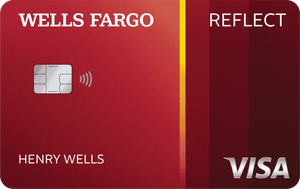
Wells Fargo Reflect® Card
Intro APR:0% intro APR for 21 months from account opening on purchases and qualifying balance transfers
Ongoing APR:17.74%, 24.24%, or 28.49% Variable APR
Rewards:
N/A
Annual Fee:$0
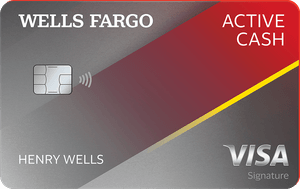
Wells Fargo Active Cash® Card
Intro bonus:
$100
Earn a $100 cash rewards bonus after spending $500 in purchases in the first 3 months.
Intro APR:0% intro APR for 12 months from account opening on purchases and qualifying balance transfers
Ongoing APR:18.74%, 24.74%, or 28.74% Variable APR
Rewards:
2% (Cash Rewards)
Earn unlimited 2% cash rewards on purchases.
Annual Fee:$0
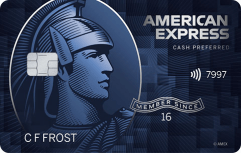
Blue Cash Preferred® Card from American Express
Intro bonus:
As High As $300 Cash Back. Find Out Your Offer.
You may be eligible for as high as $300 cash back after spending $3,000 in purchases on your new Card in the first 6 months. Welcome offers vary and you may not be eligible for an offer. Cash back is received as Reward Dollars, redeemable for statement credit or at Amazon.com checkout. Terms Apply.
Intro APR:0% on Purchases and Balance Transfers for 12 months
Ongoing APR:19.74%-28.74% Variable
Rewards:
1% - 6% (cash back)
Earn 6% cash back at U.S. supermarkets on up to $6,000 per year in eligible purchases (then 1%), 6% cash back on select U.S. streaming subscriptions, 3% cash back at eligible U.S. gas stations and on transit (including taxis/rideshare, parking, tolls, trains, buses and more) purchases and 1% cash back on other purchases. Cash Back is received in the form of Reward Dollars that can be redeemed as a statement credit and at Amazon.com checkout.
Annual Fee:$0 intro annual fee for the first year, then $95.
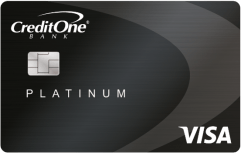
Credit One Bank® Platinum Rewards Visa® Card
Ongoing APR:29.74% Variable
Rewards:
1% (cash back)
Earn 1% cash back rewards on eligible gas, grocery purchases and mobile phone service, internet, cable and satellite TV services, terms apply
Annual Fee:$39

Credit One Bank® Platinum X5 Visa Signature® Metal Card
Ongoing APR:29.74% Variable
Rewards:
1% - 5% (cash back)
Earn 5% cash back rewards on the first $5,000 of eligible gas, grocery, internet, cable, satellite TV, and mobile phone service purchases each year, and then 1% thereafter. Plus 1% cash back rewards on all other purchases, terms apply.
Annual Fee:$95

Avant® Cashback Rewards Mastercard®
Ongoing APR:35.99%*
Rewards:
1% (cash back)
Cash back will be awarded as points redeemable for a statement credit
Annual Fee:$75*
Bank of America® Customized Cash Rewards credit card
Intro APR:0% Intro APR for 15 billing cycles for purchases, and for any balance transfers made in the first 60 days
Ongoing APR:17.74% - 27.74% Variable
Rewards:
1% - 6% (cash back)
Earn 6% cash back for the first year in the category of your choice. You’ll automatically earn 2% cash back at grocery stores and wholesale clubs, and unlimited 1% cash back on all other purchases. After the first year from account opening, you’ll earn 3% cash back on purchases in your choice category. Earn 6% and 2% cash back on the first $2,500 in combined purchases each quarter in the choice category, and at grocery stores and wholesale clubs, then earn unlimited 1% thereafter. After the 3% first-year bonus offer ends, you will earn 3% and 2% cash back on these purchases up to the quarterly maximum.
Annual Fee:$0
Bank of America® Unlimited Cash Rewards credit card
Intro APR:0% Intro APR for 15 billing cycles for purchases, and for any balance transfers made in the first 60 days
Ongoing APR:17.74% - 27.74% Variable
Rewards:
1.5% (cash back)
1.5% cash back on all purchases
Annual Fee:$0
See all our best credit cards for 2026.
When Should You Request a Credit Limit Increase?
Consider requesting a credit limit increase in these scenarios, since the chances are higher it will be successful:
- Your income has increased. Credit card issuers often consider income when determining whether you qualify for a credit card, and whether you qualify for a higher credit line after you've gotten the card. More income alone won't necessarily lead to a successful request for a higher limit, but if it lowers your debt-to-income ratio (DTI)—the amount of income that goes toward debt payments each month—it will typically make you a stronger candidate.
- You've established positive payment history. The credit card issuer will also look at your payment history on this card and your other credit accounts. If you have a stellar record with no late or missed payments, you're more likely to be approved.
- Your credit score has gone up. Your credit history is a major factor in whether the issuer will grant your request for a high credit limit. If your credit score has improved since you first got the card, you may qualify for more spending power because the issuer trusts you'll be able to manage it without missing payments.
- You've paid down other debts. In addition to earning more income, paying off debt is another way to lower your DTI, which can increase the chances you'll get a higher limit.
- You need or want more spending power. Increasing your credit limit may make sense when you plan to make a big purchase and you want the opportunity to pay it off over time, or if you regularly hit your limit and you want more flexibility.
When Should You Avoid Requesting a Credit Line Increase?
Rethink requesting a credit limit increase in these scenarios:
- Your budget can't handle increased spending. Even if you don't plan to take on new or additional debt with a higher credit line, the option is there to spend more. Avoid asking to increase your credit limit if you're already having a hard time paying bills or saving money on your current income.
- Your income has decreased. If your income has gone down or your DTI has gone up, it's less likely the credit card company will approve you for a higher credit limit.
- Your credit score has dropped. Similarly, a lower credit score—particularly, recently missed payments or a number of hard inquiries on your credit report—are indicators to issuers that there's a risk you won't be able to make payments toward new debt.
- You plan to apply for a mortgage. Asking for a higher credit line may lead to a hard inquiry, which could be a red flag for mortgage lenders and affect your chances of approval. Ask the issuer whether they'll run a credit check as part of a credit line increase request if you're considering applying for a mortgage in the next several months.
Learn more: Asking for a Credit Limit Increase vs. Getting a New Card
How to Request a Credit Line Increase
Take these steps to ask an issuer for an increase to your credit limit:
- Submit an application online. In your credit card issuer's app or on your online account, sign in and fill out a form to request a credit line increase. You'll typically need to include your current income and the amount you spend on housing costs per month.
- Or call the issuer if you prefer. You can also call the issuer's customer service number and request a higher limit via phone. Be prepared to confirm your account details and provide income and housing cost information.
- Wait for an automatic increase. The company might also approve you for a bigger credit line based on data like your credit score, income or payment history. They might offer you a credit limit increase spontaneously, or ask you for updated income—which, if it meets their qualifications, could result in a higher credit limit. Some issuers regularly consider credit line increases every six to 12 months.
Tip: When you request an increase, you might receive a response immediately. But if the company needs to verify your details or take a deeper look into your credit history, a response could take up to 30 days.
The Bottom Line
Increasing your credit limit could cause a brief, minor drop in your credit score if the issuer conducts a hard credit inquiry as part of the application process. But if you keep your balance as low as possible, a higher credit line will likely lead to a stronger credit score, since it will give you the opportunity to lower credit utilization on the card. Make sure your finances and spending habits can handle a higher limit—and that your credit score will benefit from it long-term—before moving forward.
You can see where your credit stands before you apply for a credit limit increase—and how a limit increase affects your scores—with free credit monitoring from Experian.
What makes a good FICO® Score?
Learn what it takes to achieve a good credit score. Review your FICO® Score for free and see what’s helping and hurting your score.
Get your FICO® ScoreNo credit card required

About the author

Brianna McGurran
Brianna McGurran is a freelance journalist and writing teacher based in Brooklyn, New York. Most recently, she was a staff writer and spokesperson at the personal finance website NerdWallet, where she wrote "Ask Brianna," a financial advice column syndicated by the Associated Press.
Read more from Brianna